POTUS As Home Decor: An Interview with Art Historian Jennifer Wingate
It's giving 'facile generalization' to say that Americans have a funny relationship with authority. Declarations of independence, Backing the Blue, Don't Tread On Me, Amendments 1 and 2, everything that's happened since 2016…
We – if such a "we" even exists, and I have my doubts but let's just go with it for now – also have a funny relationship with the things we put on our walls. The Shakers hung up their brooms. Warner Sallman's portrait of an impossibly white Jesus held pride of place in countless Christian living rooms, next to Footprints in the Sand. Norman Rockwell, Thomas Kinkade, Farrah Fawcett, sampler quilts, deer heads, taxidermied bass, singing bass…and pictures of presidents. What does it mean for a People so invested in the idea of their emancipation from political authority to decorate their living spaces with portraits of…political authorities?
As is true for most things, I have no idea. But someone who does is my friend Jennifer Wingate, an art historian in New York, who's just published At Home with Political Portraits: Photographs of the Domestic Display of US Presidents. (A while back, she also penned Sculpting Doughboys, about one of my other little obsessions, World War I remembrance. That's something we'll visit closer to 11/11.) Jennifer and I emailed about the display of presidential portraits, photographing POTUSes, why the images of some leaders end up being decorative elements, and also about the director of "Shaft." Can you dig it?
PREVIOUS ENGAGEMENT: You wrote a book about Americans displaying photographs of presidents in their homes. It's a fascinating topic...can you talk about how that emerged as a subject to study?
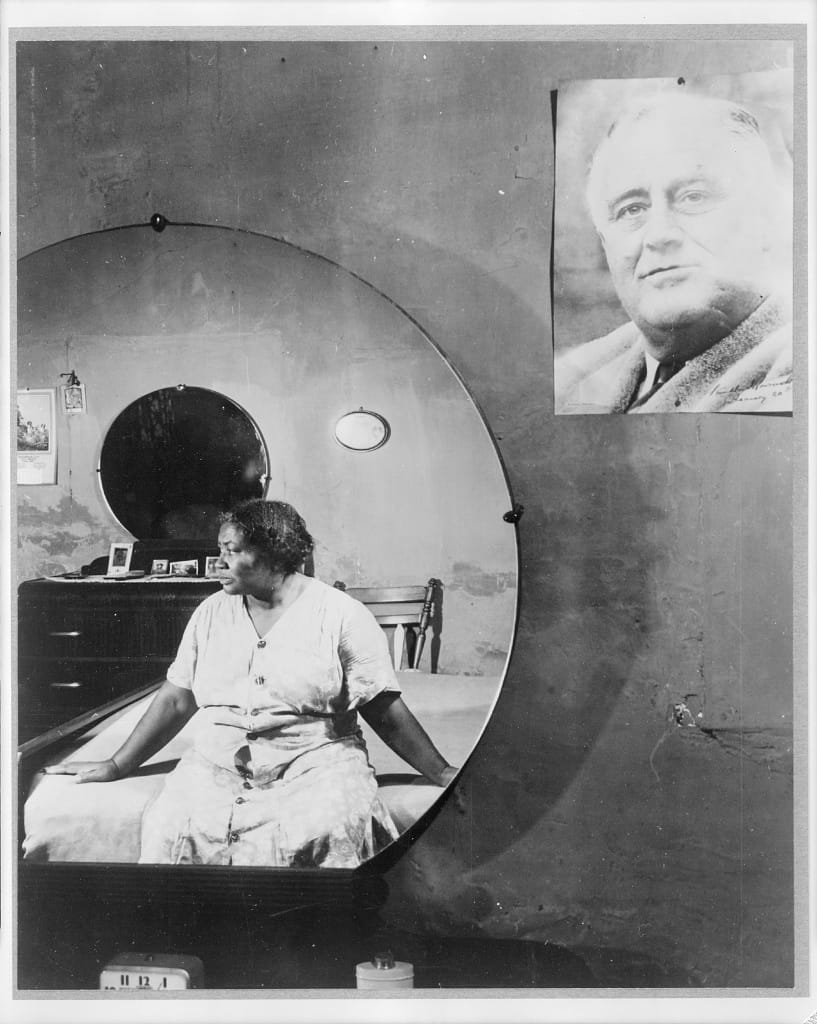
JENNIFER WINGATE: I started teaching a class in 2012 or 2013, Art of Social Change, about art that emerged alongside social movements in the US. Early on, I taught a section on Farm Securities Administration (FSA) photographs and students were asked to choose examples from the Library of Congress photography database to write about for an assignment. One of my students chose Gordon Parks' Negro Woman in Her Bedroom Washington DC (Southwest section) because her father had recently given her a framed portrait of Obama for her apartment. She said it wasn’t something she would have thought of doing herself, putting a portrait of the president on display in her home, and she was fascinated to see a precedent in Parks’ photo.
I was instantly intrigued and started talking about the topic with my colleagues. My former colleague Sara Rzeszutek suggested I read Nancy Weiss’s Farewell to the Party of Lincoln: Black Politics in the Age of FDR. My friend Eileen Luhr, a professor of history at Cal State Long Beach, suggested that I read David Greenberg’s Nixon’s Shadow. I read an article by the art historian Adam Greenhalgh on the display of George Washington prints in the 1930s.
I also saw how the topic related to my previous work on World War I memorials and the questions I was interested in then about erecting monuments to heroic men in public spaces, popular mythologies and the visual forms they take.
PE: In your book, you look at representations of three different 20th century presidents. What does the display of each of them suggest?
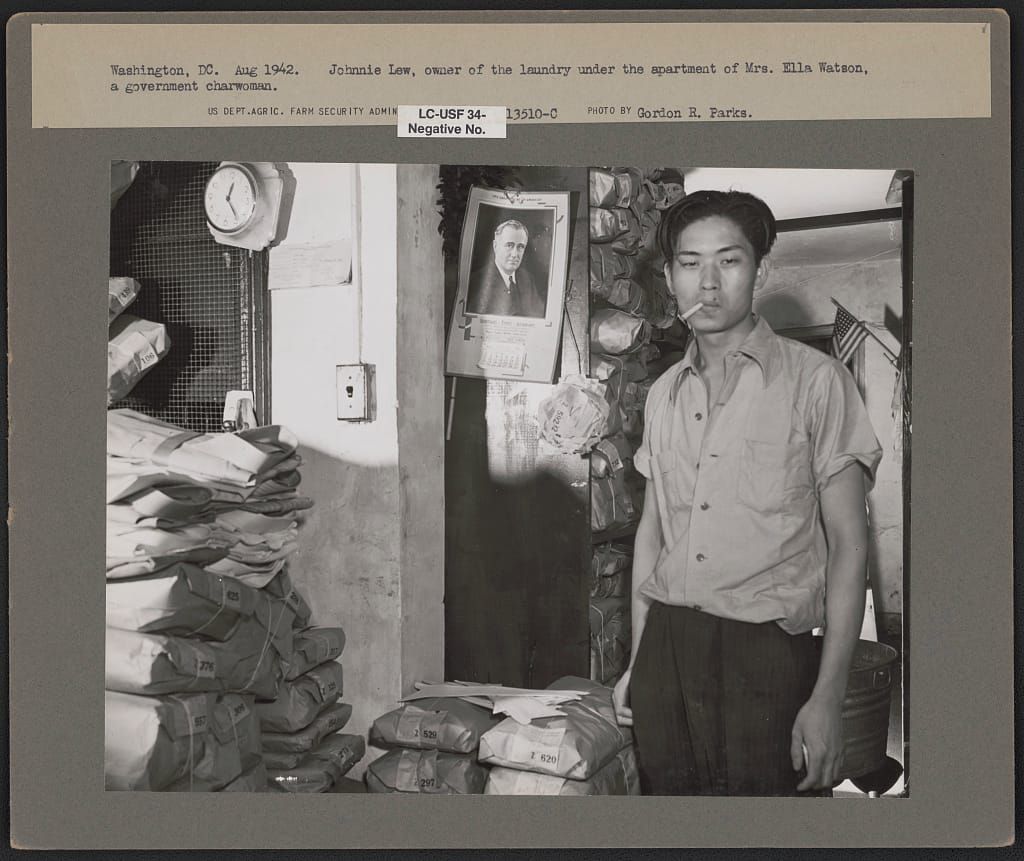
JW: Each of them suggests something about belonging, but also longing. I entered the topic by way of teaching art history. So the book is about the practice of displaying portraits, but also more specifically the artistic engagement in the practice. It was important to take into consideration who is taking the photos and where those photos are reproduced. It’s not surprising that you would find photos of FDR in homes photographed by FSA photographers since the FSA was one of Roosevelt’s New Deal agencies. On one level, they are propaganda. But you also see photographers like Gordon Parks questioning his subjects' allegiance to FDR. Parks' relationship to the FSA was a little different, and these ideological photographs in particular that I write about were not published at the time.
You see something similar with JFK and Obama, whose portraits represent longing for a time of promise and hope that has passed.
PE: A longing for a time of promise, real or imagined, is part of what MAGA is predicated on. Or says it's predicated on. Can we think about MAGA/Trump iconography in the same way as these other figures?
The photos I look at in Chapter 2 were mostly taken after Kennedy's assassination when he became a kind of secular saint and martyr figure. Many of the photographs (and one painting) of interiors that I look at in Chapter 3 were made after Trump's election. The impulse on the part of photographers and artists to capture those Obama displays in people's homes was colored in part by the way that Obama's time in office came to an end. This is what I mean by longing. They are commemorative of a time of hope that is perceived as having ended. They are elegies.
It's hard to say when or how artists will engage with Trump portraits in the same way. It takes time for this kind of sustained artistic engagement to emerge. Yes, photos of Trump are on display in US homes, but my book focuses on the artists who decide to draw our attention to those displays.
PE: The idea of putting a leader's portrait in a living space might strike some people as a kind of bow to authority. How does that square with Americans displaying images of presidents in their homes?
JW: [Ukraine president Volodymyr] Zelenskyy said during his inauguration that people shouldn’t hang his portrait in their homes or offices. By saying this, he wanted to align himself with Western democratic ideals. The Great Depression and FDR’s New Deal made everyday people feel connected to the nation in a new way. And FDR’s fireside chats personalized that relationship. Even though the 20th and 21st repersonalization of power is not unproblematic, it’s important to remember (or I have tried to convince myself!) that there is nonetheless a line between expressing gratitude and patriotic pride and becoming subsumed by an exclusionary and nationalistic cult of personality.
PE: So how do photographs of presidents operate differently from presidential representations in other media? (What about currency?)
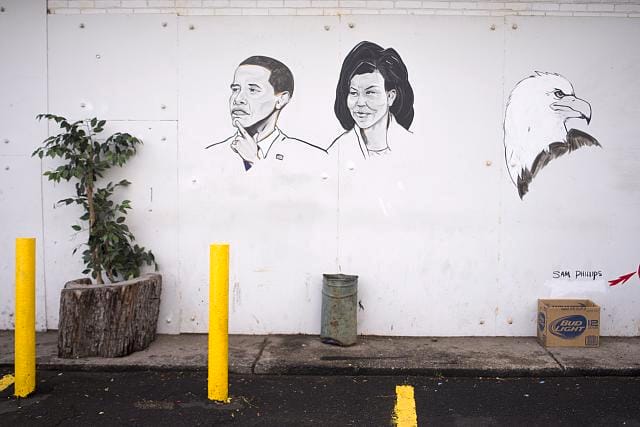
JW: In the 30s and 40s, people repurposed the images they displayed in their homes from the press (from magazines and newspapers). There was a market for presidential portrait souvenirs, promotional calendars and such. By the time of Obama’s presidency, the White House disseminated digital images of Obama directly to the public. Also, during Obama’s campaign, artists like the graffiti artist Shepard Fairey, made portraits of Obama that circulated widely. Wherever the images come from, the decision of individuals to reframe them and display them in the private/public spaces of the home changes the meaning of the photographs. Those displays are different than the state sanctioned choice of portraits for currency (also it is federally prohibited to reproduce living presidents on US currency). I think there’s more overlap in meaning between street art and neighborhood murals and the portrait displays I write about in my book because they show how portraiture is appropriated by and identified with and understood by particular people and groups of people.
PE: Also, and this is mostly an aside, as well as something that I am not the first to note, but: Gordon Parks! What a renaissance guy. Do you think the identity of the photographer matters when it comes to the way presidential portraiture is displayed?
JW: The identity and circumstances and choices of the photographers are absolutely a part of my story. I mostly focus on artists who return to the subject of domestic presidential display more than once. These are not one offs. Parks photographed FDR in homes several times. Bruce Davidson and Lee Friedlander returned again and again to Kennedy. I visited the Louis Carlos Bernal archives at the Center for Creative Photography at the University of Arizona in Tucson to learn more about Bernal's engagement with Kennedy, which was extensive. I first came into contact with Bernal's photographs in Elizabeth Ferrer's book, Latinx Photography in the United States: A Visual History. She has since written a monograph on Bernal. There are several layers of agency at play here: the decision to display a portrait of a US president in one's home and then the decision of a photographer to draw attention to that display and the cultural meaning it carries. It's a complicated and interdisciplinary topic, as is the study of visual culture generally, which is why I'm an art historian!
PE: Lastly…do you have any presidential portraits in your living space?
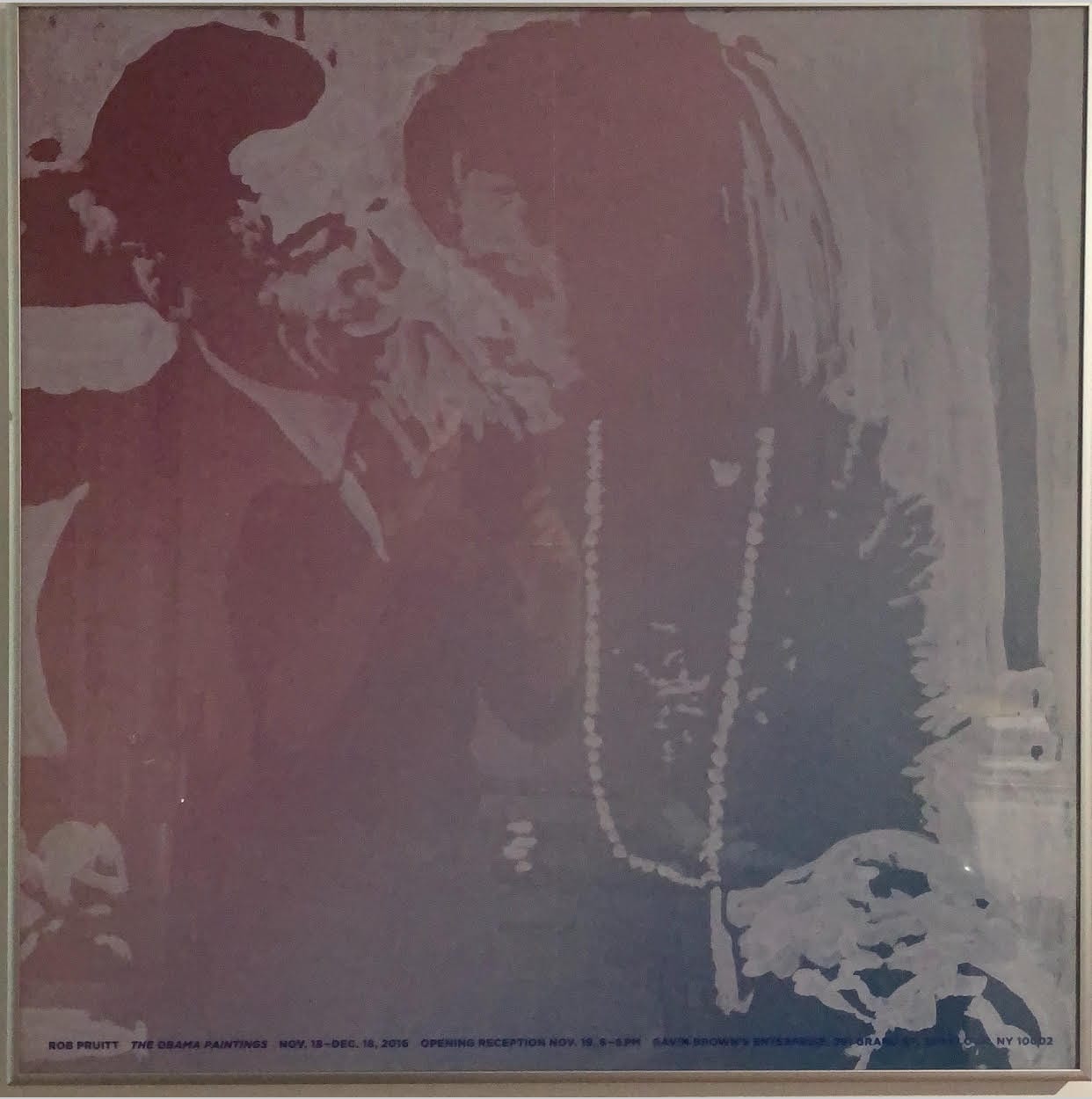
JW: I do... maybe reluctantly? I have a somewhat fraught relationship with this image. I picked up an exhibit poster when I went to Rob Pruitt's Obama Paintings show sometime in late November 2016 at Gavin Brown (on Grand Street). The poster remained in a pile of papers on the desk in my office of St. Francis College until one day that academic year when I was feeling overwhelmed and upset. I picked it up, unfolded it, and walked it to a framing place a few blocks away. When St. Francis moved campuses and I lost my office, I brought it home, but then didn't hang it on the wall of my apartment for another couple years. I'm getting ready to move again. I have a feeling I'm committed to finding a place for this framed poster now, wherever I live. Pruitt made a painting of Obama every day of his presidency, loosely rendered in white paint, and based on photos he found online. The image on the poster shows Barack and Michelle in a loose embrace, laughing. If you squint your eyes, it could be a Warhol screenprint of the Kennedys.
Like what you just read? Check out some previous Previous Engagement posts:
A Faraway Country: Czechoslovakia's golden age as seen through travel posters
Historian Scott Ellsworth Reframes the Last Year of the Civil War
And please ask everyone you know to subscribe to this newsletter!
Affiliate links disclosure: Previous Engagement will receive a small commission on purchases made through Bookshop.org's affiliates program.