Scott Ellsworth Reframes the Last Year of the Civil War
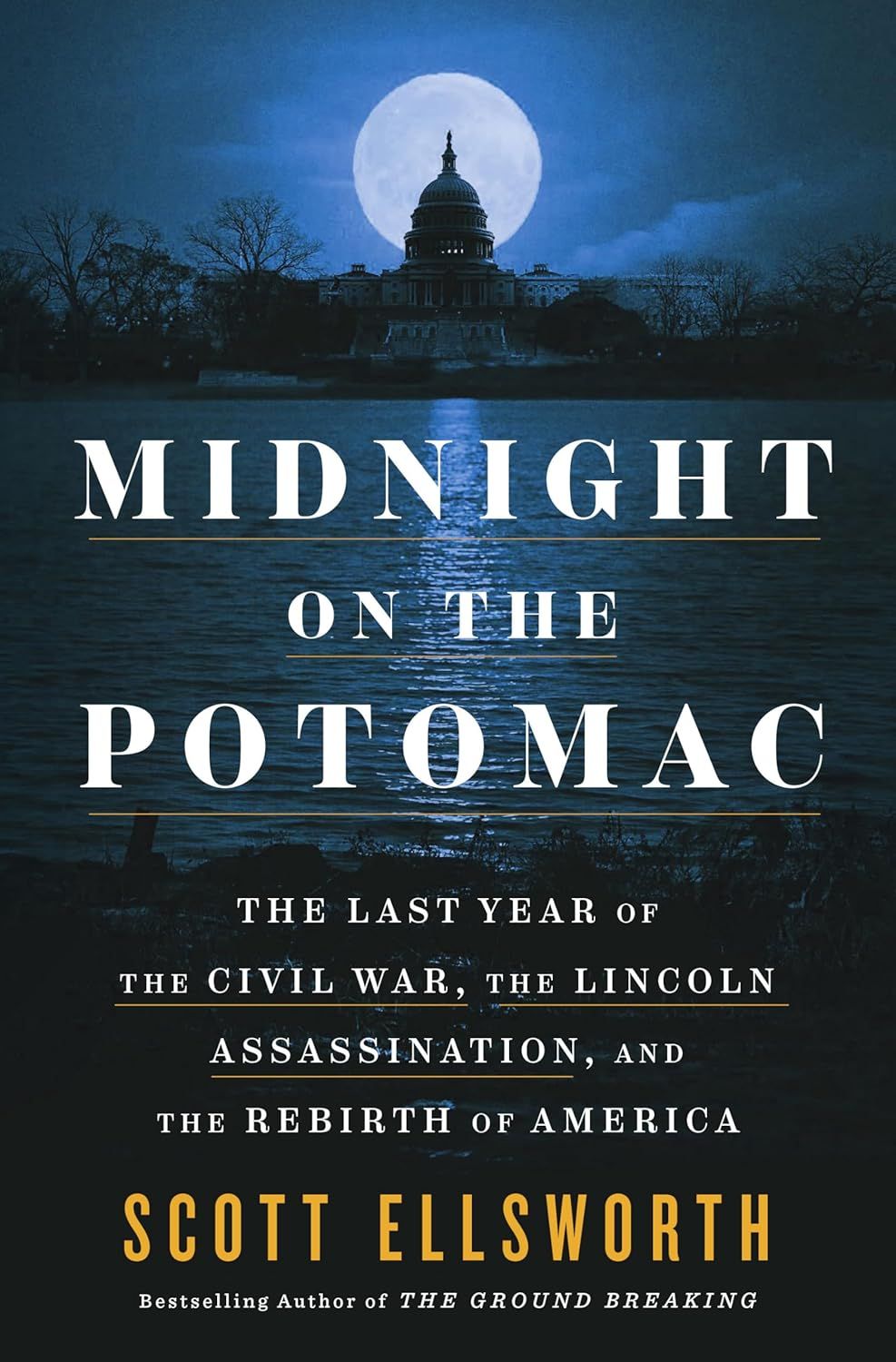
We would know much less about the 1921 Tulsa Massacre without the pioneering research of Scott Ellsworth. The Tulsa native's Death in a Promised Land is widely considered to be the definitive account of that terrible incident. Shockingly – or perhaps not shockingly at all – the book was only published in 1992, over 70 years after the massacre. There has been more scholarship on – and several popular culture representations of – the tragedy since then. But Ellsworth helped bring to light a history that was covered, suppressed, hidden. (I was able to interview Ellsworth about the Tulsa Massacre on its 100th anniversary, in 2021.)
By contrast, for his 2025 book, Midnight on the Potomac: The Last Year of the Civil War, Ellsworth turns his history brain to a topic Americans have had mainlined into our veins. I'm not the first to observe that the Civil War is an industry unto itself, and gets some major airtime in high school history classes.
But while the mere existence of the war's final year is no mystery, many of its beats are. And Ellsworth excels at finding those beats and fashioning the chaotic rhythms of that year into a gripping narrative. (I found Midnight on the Potomac to be that rare read that can be done in increments of five minutes or five hours.)
In so doing, Ellsworth delivers a report card on what I'll call the middle school era of the United States. The country gets failing grades in Civics and Health. Its Math is staggering and tragic. And its Theater program would prove disastrous.
This interview was conducted in June of 2025 via Zoom. Ellsworth spoke from his office in Ann Arbor, and I from my kitchen table in New York. It has been lightly edited, mostly just to make the interviewer sound moderately coherent.
I. The Golden Book
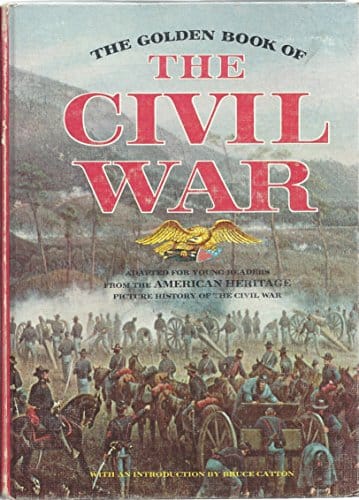
PREVIOUS ENGAGEMENT: There was something in your afterword that I thought was fun and would love to ask you about, and that's The Golden Book of the Civil War.
SCOTT ELLSWORTH: Right.
PE: And this made a difference in your life.
SE: It made a huge difference. I write in the acknowledgements how the genesis of the book in a way was a family vacation I took when with my older brother and sister and my parents in 1962, or '63. I'm 9 years old and we were driving from Tulsa, Oklahoma to go to the East Coast. Part of it was my dad had some business thing to attend to, and then we had some family in Baltimore and we went, but on the way we went to Washington, DC and Ford's Theater and all that. And to keep me entertained, I think my mom bought me this book called The Golden Book of the Civil War, which was based on this larger American Heritage history of the war, but this was really for kids. I knew about the Civil War already. I'd attended Robert E. Lee Elementary School in Tulsa. I collected stamps, so all these commemoratives are coming out from the 100th anniversary and all that, but I was just mesmerized by this book. And I wasn't smart enough, wasn't grown up enough, or [had] the wherewithal to understand a lot of it. But the photographs and illustrations were powerful, but also these maps, these sort of hand-painted maps showing all these troops, you know, and I have to tell you that book is still in print. I mean, you can go to bookstores to this day and you can still find it. And it just captured my imagination to the point that I began this campaign with my parents. We've got to go to Gettysburg. We've got to go to Antietam, and I convinced them of doing that, and I think that was sort of one of the sparks for the book, ultimately. I've been interested in the war for a long time. That's where it really all began.
PE: Was that also the start of your life and career as a historian?
SE: I would think in some degree, sure, absolutely. My parents, they encouraged that. My mother, when I was probably about 7 or something, she read me this kind of the history of the world and stuff like that. And so I learned a lot about it. And then my parents were much older than I was. When I was born, my dad was 47 years old, and he had been raised actually by his grandmother who had been born in the 1840s. So we have really long generations in the Ellsworth family. And so my dad was sort of this Victorian almost, this older figure, and I was always used to talking to older people and of course the generation that raised me all fought in World War II. They survived the Great Depression, so I knew a lot about those things just from, you know, family gatherings and dinner table conversation.
II. What's New?
PREVIOUS ENGAGEMENT: The Civil War is probably the most read about and studied thing in American history, and so it's very ambitious to tell a story that a lot of us think we know. What's new about this?
SCOTT ELLSWORTH: I had been thinking, ever since the first election of President Trump, how our nation had certainly never been as divided as it is in my lifetime, and I can remember the late '60s, early '70s as a teenager, and this was just much worse. I mean, we've never been so split. And as somebody with a historical mind, I thought back to the last time that was the case and that would have been in the 1850s and the 1860s. So I've been thinking about that era and trying to write a historical book but one with relevance for today, and pushed on with that and just started poking around and a couple things sort of picked up.
One was just literally how close we came to losing the United States as we know it in the last year of the war. The sort of the version we're given is that, you know, 'Gettysburg in 1863, here's Pickett's Charge, it's repulsed, it's the high water mark of the Confederacy and that really the war was over. It just took a while for it to happen.' It turns out that wasn't remotely the case.
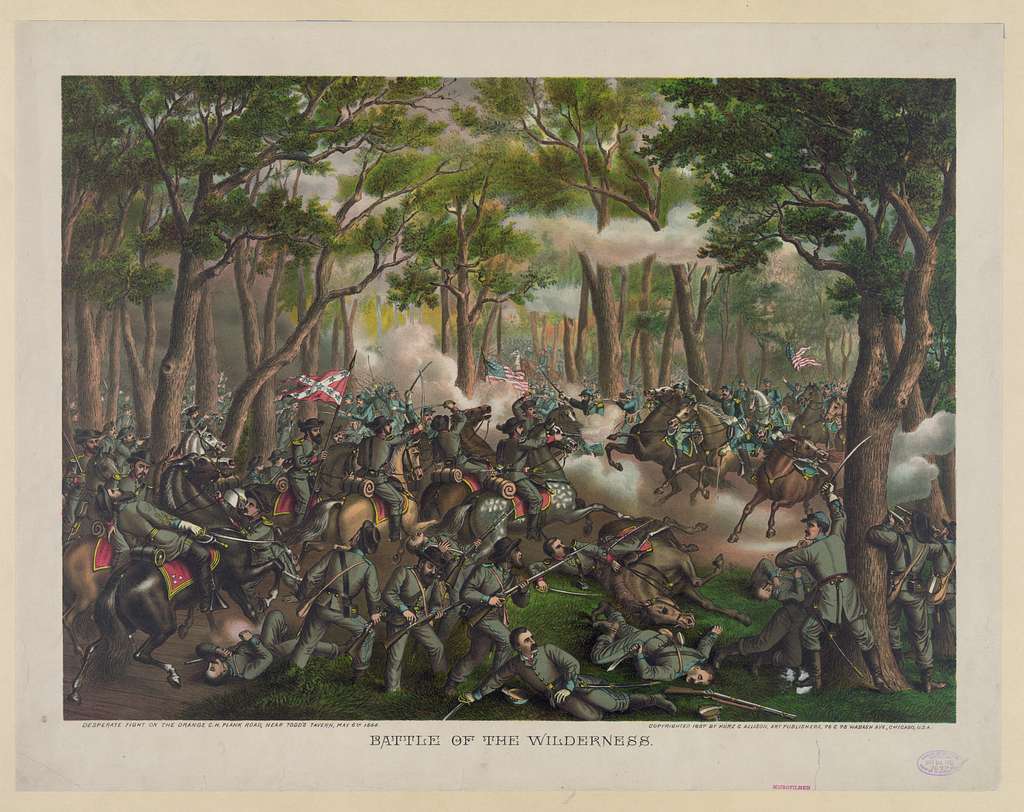
And there was the fact that Lincoln – in the summer of 1864 – and everyone else was convinced there was no way he was going to get reelected. It was probably going to be [George] McClellan who was going to be president. He was going to make a deal with the South and either let the South go or slavery is going to continue. So those are things I thought, man, that really hasn't been talked about a lot. Nor had these incredible battles at The Wilderness and Spotsylvania. If you take those two together, those are the bloodiest battles of the Civil War. But ones we never talk about. They're hardly even memorialized at the battlefields themselves.
III. Booth
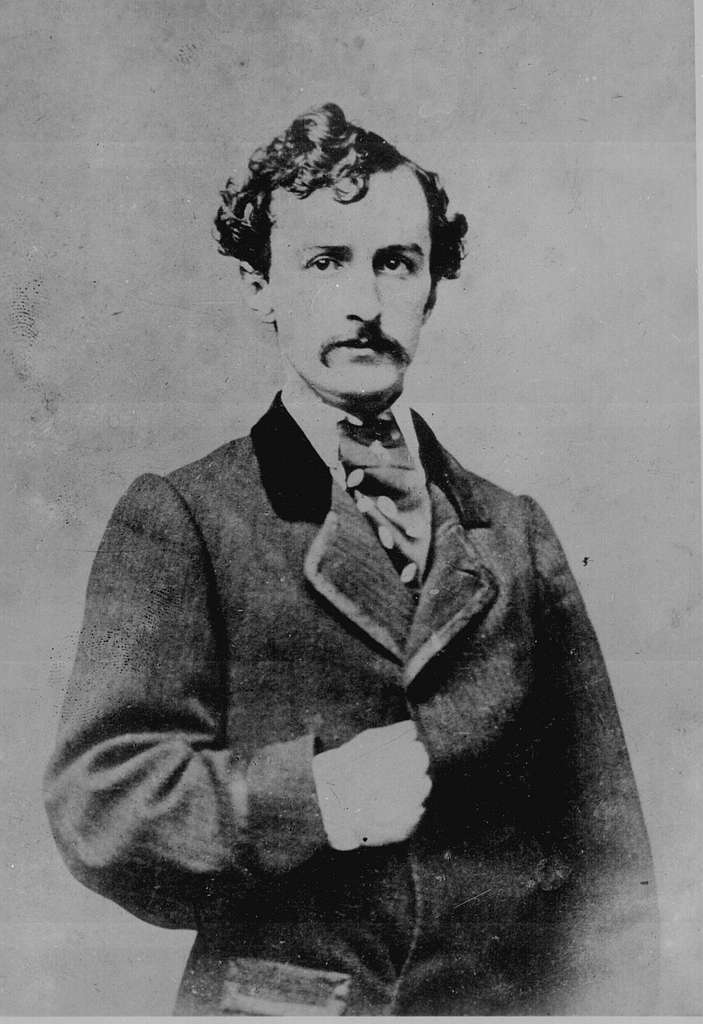
SCOTT ELLSWORTH: The more I started looking in to [John Wilkes] Booth, I was realizing something is not right. This isn't…the Booth I'm reading about is not the same Booth that we're taught We're taught this version of John Wilkes Booth as this kind of sullen, second-rate actor who's living in the shadow of his far more famous father and brother, and he's just kind of a loser, and Booth is anything but that. I mean, he is a rock star. He is a superstar of the American stage, and I talk about this at length in the book.
PE: What you wrote about Booth is really fascinating, and it wasn't how I had thought of him.
SE: Oh, he's a haunting figure. On the one hand, he's this incredible actor and he brings this unprecedented new physicality to the American stage that had never existed before. People would clap after scenes, and during a sword fight scene, the entire audience is rising to their feet because they've never seen anything like this. I mean, imagine the greatest thrilling chase from the newest Mission Impossible movie. That's what's going on and nobody had seen that before. Also, he could be almost anybody's friend. Women loved him, but men liked him as well, too. He loved children, children adored him. Vastly popular. On the other hand, he was a complete Southern partisan. He was a bitter, racist, white supremacist, and a romantic figure who had certain notions of things. But it's clear that he was manipulated. The idea that this [the Lincoln assassination] was all his plan, I hope that's been put to bed by this book. We don't have a smoking gun, but we sure have a lot of wisp of smoke tying him to the Confederate Secret Service as to what he's doing. But he's a haunting figure. He still haunts our culture to this day.
[PE p.s.: I favor Police Squad's reimagining]
IV. Amateurs
SCOTT ELLSWORTH: You know, the Civil War has never been the sole property of academic historians. There have been legions of amateurs who have done just wonderful, incredible work over the years and because it's their passion, because they, for whatever reason, they had family members who were in the war, they grew up alongside a battlefield, but these people do absolutely spectacular work. And I discovered a couple of things. First, there was a long time computer expert for an insurance company [named Arthur F. Loux], and his passion was the Civil War, and he wrote a book called John Wilkes Booth: Day by Day. It took him decades to do it, but he found every newspaper announcement about John Wilkes Booth, where he was every day. [That book was] not quite privately published, but close to that. And it turns out that there were all these reviews of Booth and that, oh my gosh, this guy is just incredible. He's declared a genius by newspapers, hundreds are turned away at his performances, but then what he [Loux] also tracked was these connections that Booth starts to have with members of the Confederate Secret Service. And I thought wait, hold on, there's something here.
I did some other work. There was an incredible book called Come Retribution by an amateur legendary Civil War historian named James Hall who connected with two former CIA agents, from what I can tell. And they started looking at Booth's movements through the lens of national security and spy agencies, and there are things that started to pop up.
PREVIOUS ENGAGEMENT: I'm interested in the idea that there's this lively sort of amateur scholarship around the Civil War. Is there a distinction between the amateur scholars and people in academia?
SCOTT ELLSWORTH: I think largely not. Certainly the amateurs will look at the scholarly literature and things like that. I mean, there's some stuff that's just way out there and there's no question, but you can tell when somebody's serious and they're trying to do a very good job. There is one division though that that I did try to bridge in the book, and that is that historically, at least, Civil War books have almost always been written by white men, which I am as well, but they're written by authors who are focused almost entirely on generals, on regiments, on battles and all of that. And you're not going to see women in those books, you're not going to see many black people in those books at all. There's a very smaller subset, way off in a corner, of social historians who write about women in the Confederacy, or African Americans in New York during the Civil War, stuff like that, but those have never been melded together. And what I wanted to do is to bring them together for a couple of reasons. The American Civil War was the first modern war in world history, in that it was the first war where you had entire societies mobilized and fighting against each other.
That had never happened before, and because of that fact, women are absolutely crucial to both the loyal and the Confederate war causes. So are African Americans, as well, and I wanted to bring those in. It really tells a story of how just by the skin of our teeth, we were able to keep our country together during the last year of the Civil War. It was not written in the stars, or written anywhere else, that the Confederacy was not going to survive, that slavery was not going to survive at least for a while. And in many ways, it's a testament to the grit and the courage and the loyalty and just the greatness of the American people, of loyal Americans during this time, who gave up so much. One out of every 50 Americans died during the Civil War and the cost of this was incredible, but the loyal citizens stayed true to the flag, stayed true to the Constitution. They saved our country. And the country that we live in today, this multiethnic, multi-ethnic, multiracial country, that's something that these people in the Civil War helped to create, and it's something that we owe them a great debt for. So in a way, this book is a tribute to them, as well.
Affiliate links disclosure: Previous Engagement will receive a small commission on purchases made through Bookshop.org's affiliates program.