A Faraway Country
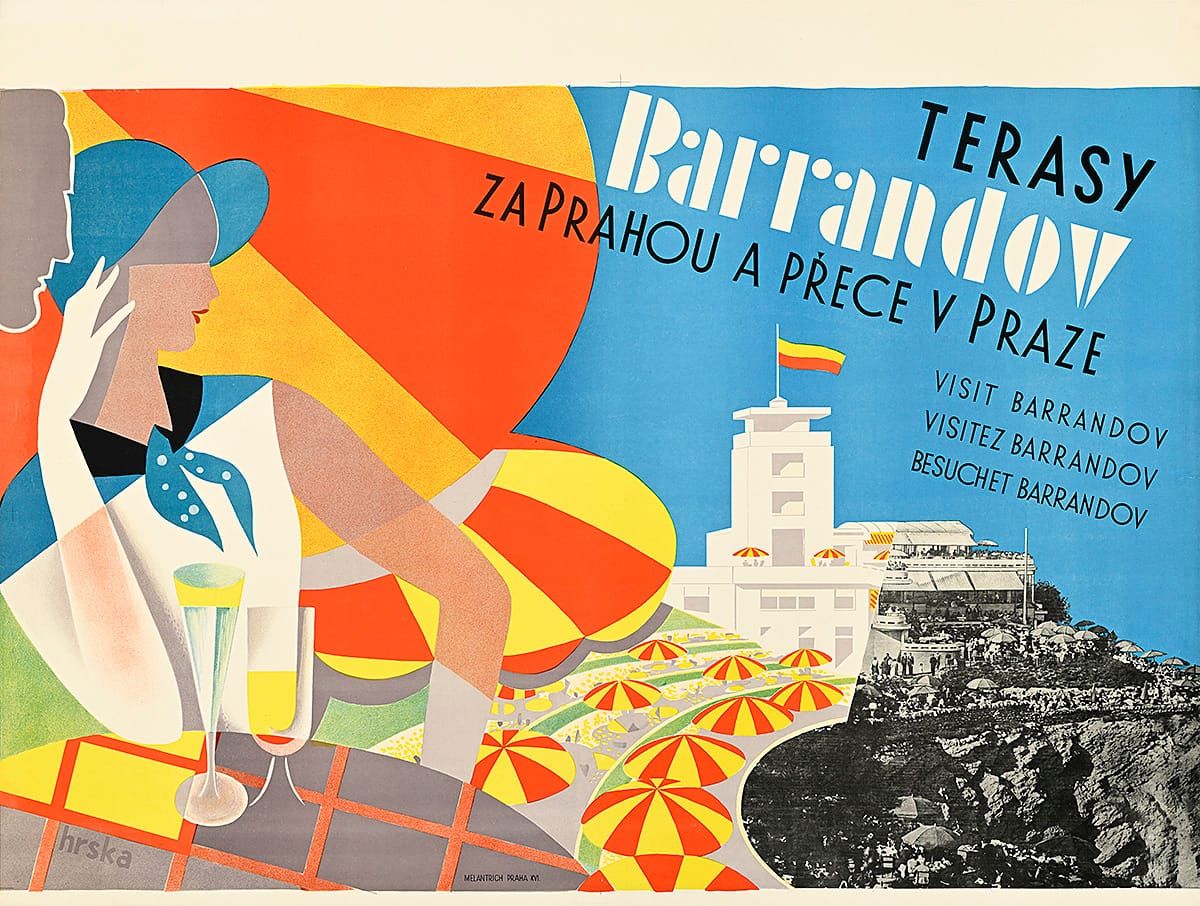
From the day of its inception to the day of its partial absorption and invasion by Nazi Germany, there was a 20-year moment when Czechoslovakia seemed to sit atop of the world: Kafka, robots, a thriving culture of art, music, film, architecture and design, and a truly impressive industrial output that was the envy of Europe.
That golden period of a state that no longer exists holds a special place in my family's history; it's where my paternal grandparents met, and where they made a life for themselves. That included making my uncle and my father. And it's where they would have stayed, if not for the above-mentioned Nazi invasion.
That long-ago time and faraway place hold similar fascination for Nicholas Lowry. He's the president of Swann Auction Galleries, and you may know him from his appearances on Antiques Roadshow. Lowry's father was also born in Czechoslovakia, and, as Jews, his family made an even more urgent departure than my family did in the late 1930s. I can't speak for him, but I suspect Lowry looks to the early years of Czechoslovakia with that same mingled sense of amusement and romance, loss and awe. A nostalgia for an unknown era. There's probably a German word to describe this, but that language seems inapt to use in this context.
And of course, if our families hadn't left Prague, neither of us would have been born.
But while my connection to the old country mostly extends to an appreciation of pilsner, fried cheese, and, not to brag, an A+ on my 6th grade country report on CZ – Lowry has found some interesting ways to tell the story of the country his family was forced to leave.
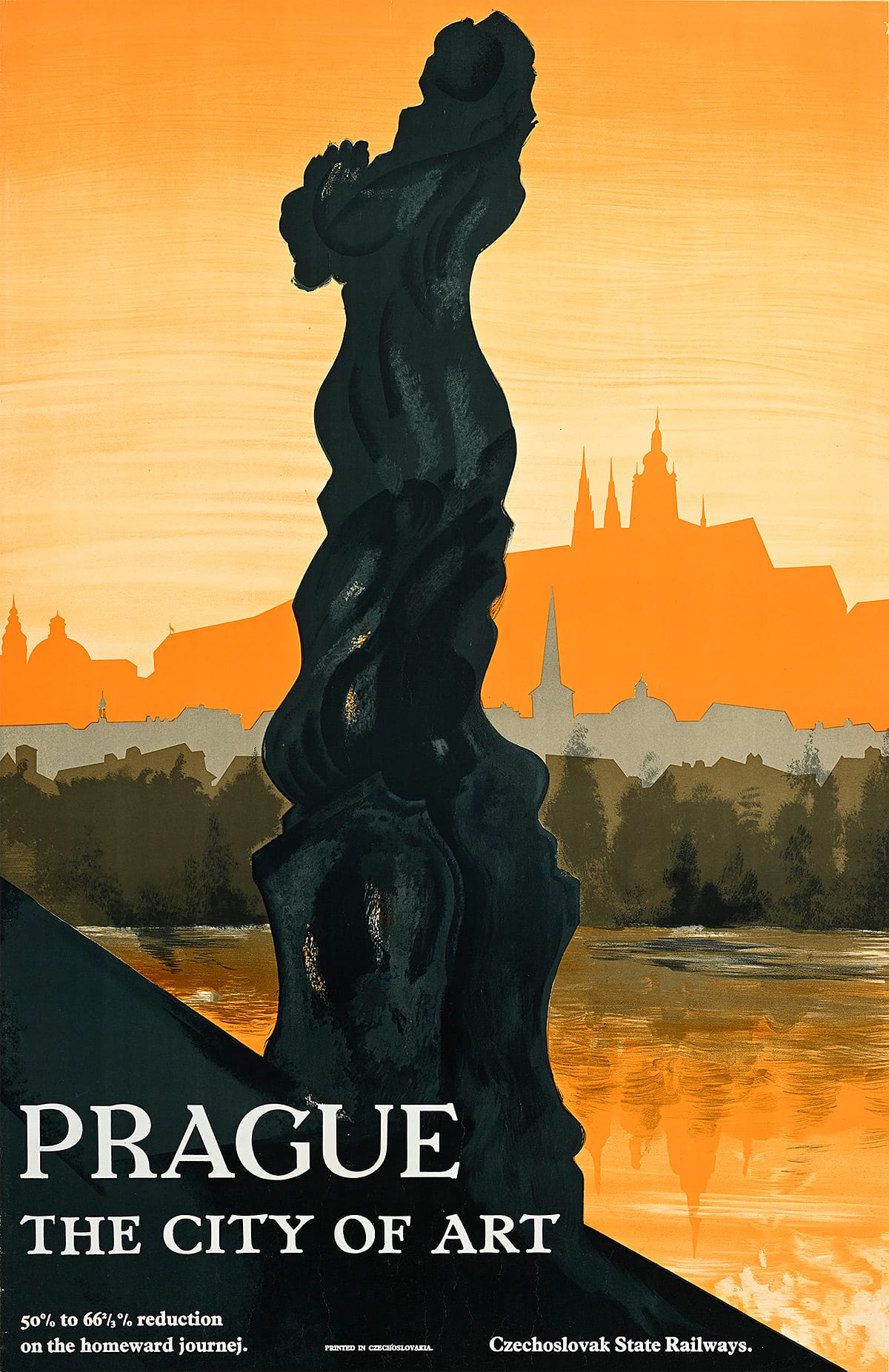
He hosted an excellent travel series, as well as a feature film, about Czech design, and he curates exhibits of Czech poster art – including From Monarchy to Modernity: Travel, Identity, & the Czechoslovak First Republic (1918–1938) at the excellent Poster House in NYC.
I visited with Lowry with my camera earlier this summer at Poster House, and I put together a video piece about an ephemeral art form – that is, posters – from an ephemeral country.
Czechoslovakia, Lowry says, "was formed out of some pieces of Hungary, some pieces of Poland, what was Bohemia and Moravia," to say nothing of Slovakia. "In all of these different territories, there were different nationalities of people who all of a sudden were coming under a single umbrella of 'Czech-hood.' So these posters also tried to present a unified statehood to the people who lived in the places others were being encouraged to visit."
They are lovely to look at, and also, I feel, very sad. They're on display at Poster House until early November. A sister exhibit at the Czech Center New York opens in early September.
Extra special thanks to Nicholas Lowry for sharing his time and knowledge.
I'm dedicating this post and piece to my father, Wendell Poppy, and his siblings Josie and John, as well as their parents, Anne and Hugo.